




HOUSE OF THE DRAGON: Its DEXTER Moment? Explaining the Daemon-Dragon ‘Plot Hole’ in Season 3

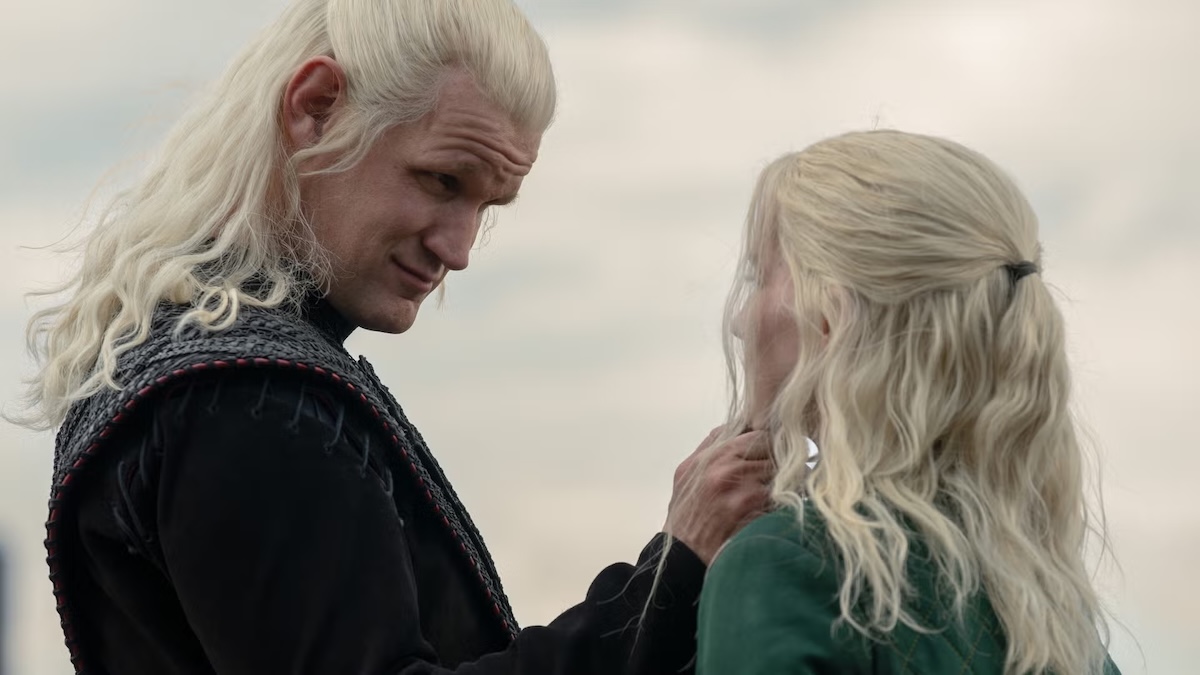
Table of Contents
House of the Dragon’s Dexter Moment
I don’t believe the fake Daeron Targaryen incident at the beginning of HBO’s House of the Dragon: Season 3, Episode 3: Rhaenyra Triumphant was its jump-the-shark event, but it was the series’ first Dexter moment.
What I mean by “Dexter moment” is a plot hole inserted for story convenience by an episode’s writer that makes no logical sense and sticks out like a sore thumb.
The Incident
Let’s break down House of the Dragon’s “Dexter moment,” shall we? A basic rundown of the situation:
-
Daemon Targaryen asks for Daeron Targaryen, who is a dragon rider and bonded-owner of the dragon Tessarion.
-
-
Daemon has never seen the current version of Daeron and takes the boy to King’s Landing. This is the introduction of the intentional plot hole, the “Dexter moment” – the boy’s dragon is not with him yet that fact is never mentioned by anyone in the episode.
-
When mother and son are finally brought together—the boy is revealed not to be her son. He is not even Targaryen.

The Unraveling
This moment in Rhaenyra Triumphant was an unraveling of the entire episode, and for me, potentially the series. You cannot play a trick on the viewer that was obviously not a trick but purposeful bad writing and expect to keep their respect.
The writer of this episode, Sara Hess, created a micro-Meereenese knot for herself at the outset of Rhaenyra Triumphant:
Give a stand-in for Daeron to Daemon if Daemon asks for him, but keep the fact that no dragon accompanies the boy until the third-act reveal, and also keep the lack of Tessarion’s presence out of the common-sense awareness of all applicable characters.
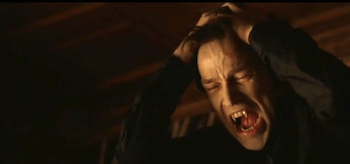
This artificial plot hole is reminiscent of the last three seasons of Showtime’s Dexter, where the writers wrote themselves into narrative dead ends and then instituted an obvious plot hole or contrivance to get themselves out of it. They began doing so over and over again, keeping the episodes and seasons going while degrading the show, eventually turning a great TV series into a shadow of its former self. The same thing happened with HBO’s True Blood, and now I fear it may be happening with House of the Dragon.
The writer of Rhaenyra Triumphant thought the viewer was absolutely stupid and wouldn’t realize that Daemon didn’t notice when Tessarion didn’t follow Fake Daeron as they left for King’s Landing.
The writer thought the viewer was a total moron and wouldn’t notice that no one in King’s Landing observed that though Fake Daeron was in King’s Landing, Tessarion wasn’t, nor did any character ask where that dragon was.
The writer thought that the viewer would not recall that Rhaenyra Targaryen never mentioned that by sentencing Fake Daeron to The Wall, she was also sending his bonded dragon there as well.
Why did Rhaenyra never mention the loss of the bonded dragon Tessarion to The Wall?
Because there was no dragon.
There was no dragon decision or dragon implications to weigh.
The dragon was never there; Rhaenyra Triumphant’s writer never had Rhaenyra struggle with this strategic issue (the loss of a dragon to The Wall during a war) because that would expose the fact that Tessarion didn’t accompany Fake Daeron off the battlefield, was not at King’s Landing, and had never been there during the entire episode. The logic of this situation would have fallen apart; thus, Hess hid this important fact (Tessarion’s absence) until her plot twist was sprung.
In hindsight, this engineered situation was like watching a child spill juice on the table, not expecting the grown-ups sitting there to notice. They noticed.
If you can’t write a structurally sound identity-swap storyline, don’t write an identity-swap storyline. I know these are tough words, but House of the Dragon is a triple-A TV series. Where were the checks and balances to make sure something like this did not happen? House of the Dragon, from a technical stand point, is as good as it gets. How did no one during the writing, editing, production, or post-production process not see this Dexter-grade plot hole or not care about its existence?
I waited until the next episode of House of the Dragon, entitled Tumbleton, for an explanation, hoping this artificial plot hole would be filled in with a wholesome and substantive explanation. That did not happen. The Fake Daeron trick in Rhaenyra Triumphant was left to linger on its wobbly, cancerous legs.
The Tassi Defense
I read through Paul Tassi’s defense of House of the Dragon’s “Dexter moment” in the Variety article “Explaining The Daemon-Dragon ‘Plot Hole’ In ‘House Of The Dragon’ Episode 3.” When I finished reading Tassi’s piece, I was in utter disbelief. I could characterize his article, but out of common courtesy, I will not. What I will do is go over his three main bullets.
Tassi’s First Point
“One is that Daemon knows enough about dragons to know that separating a rider from a dragon effectively neuters that dragon. He was planning to kill Daeron anyway, permanently severing that bond. And it’s not like the junior high-age dragon was much of a threat to begin with.”
Separating a rider from a bonded dragon does not neuter a dragon. A dragon becomes riderless following the death of its original rider, like Vhagar became riderless after Lady Laena Velaryon’s death. The dragon then can become claimed by a new rider, one the dragon deems worthy. This is shown in Season One of House of the Dragon.
Killing Daeron would make Tessarion riderless, possibly giving Rhaenyra the opportunity to present to the dragon a potential new rider, a Targaryen totally loyal to her. Daemon would never leave that dragon, that opportunity, behind.
With regard to posing a threat, Daenerys Targaryen’s dragons, much smaller than Tessarion, were a lethal threat to her foes at Slavery’s Bay. Imagine what Tessarion could do to an enemy.
Tassi’s Second Point
“Daemon would also not want to kill a dragon, as even if he is rather heartless, he respects Targaryen tradition and the beasts themselves not to do that.”
This bulletpoint has no connection to why Daemon didn’t take Tessarion with him. This bulletpoint has no relevance to how or why Daemon didn’t immediately notice that Tessarion wasn’t following Fake Daeron or made no move to do so when they left the battlefield for King’s Landing.
Let’s take Tassi’s bullet point at face value—first, just because Daemon respects Targaryen tradition doesn’t mean he would be foolhardy enough to leave a devastating weapon like a dragon on the battlefield for someone else to potentially use against him or his queen. Second, Daemon doesn’t respect anyone or anything. He ridicules religion. He paralyzed, then beat to death his first wife with a rock, mocked his king, and choked his queen when she spoke about a subject he was ignorant of, yet Daemon respects tradition and trained animals?
Tassi’s Third Point
“But one thing that I think was missed was that Daemon actually was going to collect the dragon. The injured man at the end was a dragon handler, presumably sent to go collect the dragon and bring it back, assuming there would be no resistance after the surrender, rather than a bunch of random soldiers attempting to do so. It’s long been established that dealing with dragons is a special skill and process.”
It is never established in Rhaenyra Triumphant if the injured man, a dragonkeeper, was sent to “collect” Tessarion or not. He may have lived in Tumbleton with other dragonkeepers and escaped when it was attacked by Ormund Hightower. Even if Tassi’s point about the dragonkeeper is true, it would be an even more egregious intentional writing mistake by Hess than already established. It would also be the most idiotic move Daemon could possibly have made. Tassi is suggesting that instead of taking Tessarion by force, backed by three dragons, the safest and easiest move possible at the beginning of Rhaenyra Triumphant, Daemon a.) lets the dragon leave with an enemy army and b.) then sends dragonkeepers, with no dragon protection during a war, to go “collect” Tessarion? That doesn’t make any sense.
Conclusion
As it stands, the only people fooled by the “Dexter moment” in Rhaenyra Triumphant were House of the Dragon’s other writers for believing Hess capable of writing an episode by herself and, by implication, House of the Dragon as a series; its producers; the show’s legitimacy; and the legacy the show had been building.
I don’t want to believe what I witnessed in these two episodes of House of the Dragon, but it is not going away. I, however, have moved away from the series. I have not watched an episode of the series since Tumbleton aired.
Leave your thoughts on this House of the Dragon: Season 3 editorial below in the comments section.
Readers seeking to support this type of content can visit our Patreon Page and become one of FilmBook’s patrons.
Readers seeking more House of the Dragon can visit our House of the Dragon Page, our House of the Dragon Twitter Page, and our House of the Dragon Facebook Page.
Readers seeking more HBO articles can visit our HBO Page, our HBO Twitter Page, and our HBO Facebook Page. Readers seeking more HBO Max articles can visit our HBO Max Page, our HBO Max Twitter Page, and our HBO Max Facebook Page.
Want up-to-the-minute notification? FilmBook staff members publish articles by Email, Mobile App, Google News, Apple News, Feedly, Twitter, Facebook, Instagram, Tumblr, Pinterest, Reddit, Telegram, Mastodon, Flipboard, Bluesky, and Threads.
Related Articles