
Film Review: LOGAN (2017): The Finest Wolverine & Second Best X-Men Movie-to-date

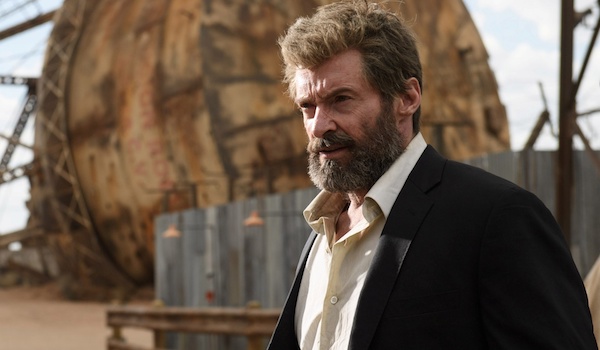
Logan Review
Logan (2017) Film Review, a movie directed by James Mangold, and starring Hugh Jackman, Patrick Stewart, Richard E. Grant, Boyd Holbrook, Stephen Merchant, Dafne Keen, Sienna Novikov, Elizabeth Rodriguez, Dave Davis, Eriq La Salle, Julia Holt, Lauren Gros, Elise Neal, Juan Gaspard, and Jaden Francis.
Logan is the best stand-alone Wolverine film to date and the second-best X-Men film to date (behind X-Men 2). Wolverine fans had to wait through numerous PG-13 X-Men film outings and two horrific Wolverine films to get to Logan.
The aforementioned films are the heavy, carry-on luggage that the viewer brings with them into Logan. By the time Logan ends, not only is that luggage discarded, but their deleterious memory is also seen as a necessity. It took those films—those ups and downs—to create a Wolverine film that finally gets it right.
Logan is the most grounded superhero film to be released in years, possibly since Batman Begins.
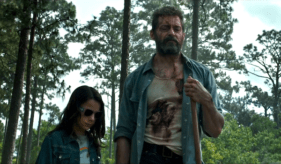
Logan is an X-Men film unlike any other X-Men film. It continues the James “Logan” Howlett / Wolverine (Hugh Jackman) storyline from the previous X-Men films, but there are no distracting explosions or CGI nonsense within the film. Logan is a different type of comic book film. It is an intimate character piece, full of heart, brutal combat, well-written and acted revelations, and substance.


The heart and soul of the film are Wolverine and Charles Xavier (Patrick Stewart)’s relationship and the old gunslinger motif from Westerns. There is a role reversal in Logan between Wolverine and Xavier. Instead of Charles protecting, housing, and feeding Wolverine, Wolverine does all of those things and then some for Charles—e.g., Wolverine placing Charles on a toilet so he can excrete. Wolverine is Charles’ dutiful caretaker, but unlike a disinterested, paid nurse, Wolverine deeply cares for Charles. Charles is the sole remaining remnant of the happiest time in Wolverine’s life. Charles is also Wolverine’s mentor and closest friend. Both characters ooze that relationship in Logan.
That relationship is exemplified when Charles turns Wolverine’s head toward him and tells Wolverine that he is such a disappointment. The two of them have been on a long journey together, a journey that is coming to an end. The time for lies is over.
In keeping with the old gunslinger motif found in Westerns, the Wolverine in Logan is long past his prime years. By the time period in the film (2029), Wolverine is over a hundred years old. He is suffering from multiple signs of his advanced age (dull eyesight, healing factor shutting down, etc.), including an undisclosed ailment that may be slowly killing him.
All of those ingredients give texture and substance to “the old” Wolverine that the viewer is seeing. It makes him human, relatable, and real. Also humanizing is Wolverine’s desire to ride off into the sunset with Charles (and possibly Caliban—played by Stephen Merchant) and escape the current world and their fates within it.
The world of this western is recognizable to the viewer, even though it is 2029. Logan contains the familiar—e.g., mutants are being hunted—and the unfamiliar—e.g., automated semi-trucks and human robo-enhancements. All of these elements are part of a cohesive narrative where the former dominates while the latter adds to the background tapestry. The world on display in Logan is slowly turned, like a miniature globe in the hand, so the viewer can see its minute details. The live-action Ghost in the Shell film tries to do this, but it comes off as artificial, digital, and fake. In Ghost in the Shell, the camera would, at times, and to its detriment, only show the viewer the CGI environment. In Logan, it is character and narrative first, environment second—i.e., the environment is there, but someone is talking or something is happening within that environment.
One of the most interesting parts of Logan‘s environment and one of the film’s greatest narrative accomplishments is that mutants are all but extinct thanks to anti-mutant drugs placed into humanity’s water and food supply. Like in Deadwood and Children of Men, this is spoken of as if common knowledge (by those in the know) in Logan before its architect and his latest Weapon-X experiments become key factors in the film.
The most interesting background element in Logan is how the original X-Men team has died and how the world sees Charles Xavier. It is a wonderful character moment in Logan when the sorrow bubbles to the surface of Xavier, and he speaks of that terrible event to the one person, the one former student, that is still by his side. Wolverine must have told Xavier that it wasn’t his fault hundreds of times, but the pain of that day still weighs on Charles. It is a moment of narrative revelation and of lost loved ones, something that only Wolverine can truly understand. It is unfortunate that Wolverine is not there and is not listening to Charles’ greatest regret. Wolverine doppelgänger X-24, who is the biggest surprise of the film, stands there instead.
Brutal, feral, and rage-filled X-24 kills Xavier in such a soft way that it can only be at the behest of Dr. Zander Rice (Richard E. Grant). Both are aided in achieving Xavier’s death by one-time ally Caliban. Caliban’s betrayal of Xavier is a moral one—Charles Xavier’s mind has degraded into a bio-weapon of uncontrollable power. By helping to kill Charles, Caliban sees it as preventing multiple future deaths from happening, including his own. Of all the “bad” guys in Logan, Caliban is the only one who is morally conflicted. The other bad guys in Logan are one or two-dimensional at best (though Donald Pierce’s sub-textual intro scene is highly effective), standard for a comic book movie outside of a Nolan-helmed superhero film.
Also two-dimensional in Logan is Laura / X-23 (Dafne Keen). Through the majority of Logan, the viewer never gets a sense of who X-23 is outside of her powers, what she has been through, and what has been done to her. It is only in the third act of Logan that bits of her personality emerge. Before that, X-23 is all quiet intimidation—e.g., the cereal scene in the first act of Logan.
One of the lingering plot holes of X-23’s story-line in Logan is that it is never disclosed how or where she learns combat tradecraft—e.g., how to fight, how to evade detection in an urban setting, etc. That point notwithstanding, watching X-23 fight X-24 in the third act of Logan is one of the action highlights of the film (besides Wolverine fighting X-24).
Wolverine’s early rejection of X-23 and his eventual acceptance of his daughter and growing affection for her during his death mark Wolverine coming full circle as a human being and the end of his long and turbulent character arc.
The ending to Logan may be the most poignant of any superhero film before it, exceeding the ending to Christopher Nolan‘s The Dark Knight. Ending Logan with words spoken by X-23 from a lauded and classic western film like George Stevens‘ Shane is the perfect way to end Wolverine’s story-line. Wolverine was always a loner, a man who enters from the east and exits through the west. As the marker on his grave is adjusted to its proper position, the viewer is made aware of the path Wolverine has always been on. It is a path, at its end, where X—home, family, the X-Men—marks the spot.
Rating: 10/10
Leave your thoughts on this Logan review and the film below in the comments section. Readers seeking to support this type of content can visit our Patreon Page and become one of FilmBook’s patrons.
Readers seeking more film reviews can visit our Movie Review Page, our Movie Review Twitter Page, and our Movie Review Facebook Page.
Want up-to-the-minute notifications? FilmBook staff members publish articles by Email, Mobile App, Google News, Feedly, Twitter, Facebook, Instagram, Tumblr, Pinterest, Reddit, Telegram, Mastodon, Flipboard, and Threads.
Related Articles