




Film Review: It Was Just an Accident (2025): A Gripping Psychological Thriller of Conscience, Power, and Revenge


It Was Just an Accident Review
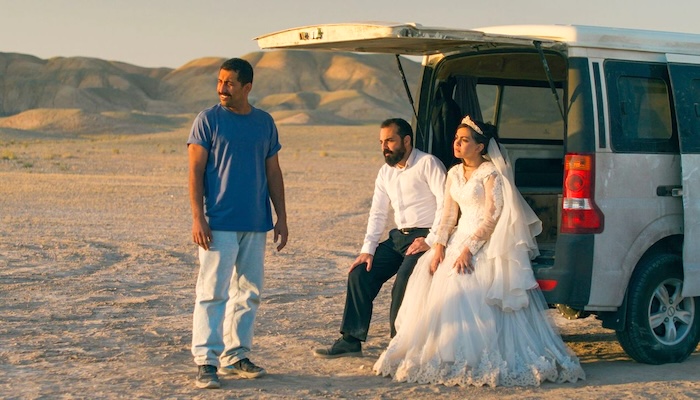
It Was Just an Accident (2025) Film Review from the 50th Annual Toronto International Film Festival, a movie directed and written by Jafar Panahi, and starring Vahid Mobasseri, Mariam Afshari, Ebrahim Azizi, Hadis Pakbaten, Majid Panahi, Mohammad Ali Elyasmehr, Delnaz Najafi, Afssaneh Najmabadi, and Georges Hashemzadeh.
It Was Just an Accident is an affecting film that captures the consequences of imprisonment during a particular period of time in Iran and what that situation is capable of turning those involved into throughout that detainment.
It Was Just an Accident’s initial strength is that the most unlikely people are protagonists in the film. The viewer doesn’t know what these people are capable of or the traumas that they carry from their docile, domestic veneers. Each of them is a bomb waiting to go off, some more than others, and most do to varying degrees throughout the film.
The eventual kidnappers are either criminals due to their hostage, or they are vigilantes extracting justice from a villain materialized from their pasts. Gaining confirmation of what to do in either scenario, whether it’s their former tormentor or not, successfully drives the drama for 99% of It Was Just an Accident. Shaky memories, i.e., the unreliable narrator, make the investigation that much more engaging and suspenseful. The viewer eventually wants to know whether or not the captured person is the epitomized Big Bad Wolf. The film almost, but not quite, becomes more about the cadre of survivors’ everyday lives and who they are now than the identity confirmation of their captive or who they were before imprisonment. I say “almost” because the viewer wants to know. Writer/director Jafar Panahi creates that need in the viewer and doesn’t let it go until a precise point in his film.
The revelation by the tree in the third act of It Was Just an Accident—”I knew it was wrong, but I was used to it by then,” the two people involved screaming—is terrifying, cathartic, and fulfilling. Shiva (Mariam Afshari) effectively brings the viewer into her former cell, into her singular torture as the situation builds. It personalizes the scene for its participants and the film. Shiva, the most level-headed out of the vigilantes, is the one that has the greatest emotional break. Whether or not Eghbal (Ebrahim Azizi) is the group’s former torturer is not the jackpot. It’s the journey getting to this moment and what happens afterward that are the rewards. That notwithstanding, the revelation is good. It has a complex yet understandable explanation—learned behavior through repetition—and clear reasoning behind it: moral compromise to achieve a goal. Eghbal is as compromised by inflicting pain as his victims are by receiving it, perhaps even more so, because his compromises are tinged with guilt and remorse.


It is very surprising that when confronted with the monster from their nightmares, the remaining protagonists make the human decision that they do. It illustrates that Eghbal hasn’t beaten them. He hasn’t driven the humanity out of them.
At the end of It Was Just an Accident, Vahid (Vahid Mobasseri) is happy, wearing white, the color of purity, renewal, and cleanliness. He is relieved and unburdened, and it shows in his attitude. He didn’t give in to his urge for revenge. He faced the demon from his past and took the high road.
Then comes the signature squeaking—and one of the best moments in the film. It is a pure power play at work, saying wordlessly, ‘You got to me, you found me, you let me go, and now I am doing the same to you.’ The director lets the scene build and sustain itself perfectly, i.e., he keeps Vahid’s back turned, perpetually asking the same question over and over again: Is Eghbal there? Valid believes he is there. The viewer believes Eghbal is there. The director lets the moment work on the imagination, and then a new question occurs: what will Eghbal do? Answer: the unbelievable and the excellent. Eghbal decides to keep his word, showing personal growth and gratitude (though that growth might predate his abduction), and walks away, the squeaking receding back down the alleyway. It is a textbook example of tension and release.
It is also an instance of personal development for Eghbal—’I am more than my past antagonisms. I am not the monster you make me out to be, and I am him. He is still here; he still pulls a string or two.’ That pulled string is what brings Eghbal to Vahid and that alleyway, to show he still has power in the situation and can act but chooses not to. It’s a wonderful beat and ends a film of surprises with two character moments, mirroring the film’s beginning, with Eghbal and Vahid alone in a confined space, but this time with Vahid no longer fearful, changed, and ready to face what he has to face—a bullet to the back of the head, a firing squad, and Eghbal, showing he is undaunted and uncowed by what he’s just been put through. Vahid and Eghbal are more alike than different at the end of It Was Just an Accident.
Rating: 9.5/10
Leave your thoughts on this It Was Just an Accident review and the film below in the comments section. Readers seeking to support this type of content can visit our Patreon Page and become one of FilmBook’s patrons.
Readers seeking more Toronto International Film Festival news can visit our Toronto International Film Festival Page, our Film Festival Page, and our Film Festival Facebook Page.
Readers seeking more film reviews can visit our Movie Review Page, our Movie Review Twitter Page, and our Movie Review Facebook Page.
Want up-to-the-minute notifications? FilmBook staff members publish articles by Email, Mobile App, Google News, Feedly, Twitter, Facebook, Instagram, Tumblr, Pinterest, Reddit, Telegram, Mastodon, Flipboard, Bluesky, and Threads.
Related Articles