



Film Review: BLUE MOON: Strong Writing & Acting Bring a Multi-faceted Character to Life [TIFF 2025]


Blue Moon Review
Blue Moon (2025) Film Review from the 50th Annual Toronto International Film Festival, a movie directed by Richard Linklater, written by Robert Kaplow, and starring Ethan Hawke, Margaret Qualley, Bobby Cannavale, Andrew Scott, John Doran, and Anne Brogan.
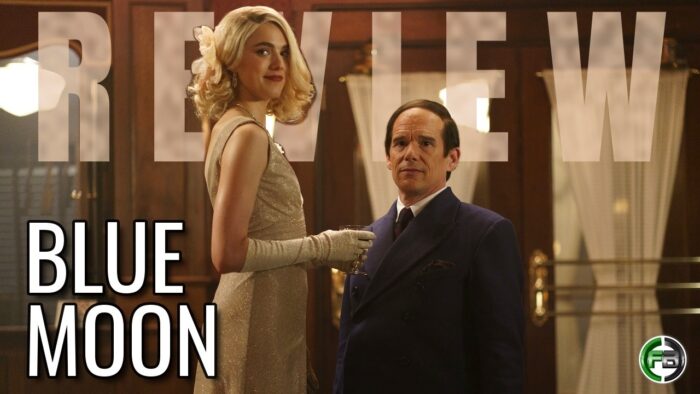
Blue Moon is a period-piece film filled with extremely rich dialogue, conflict, and a potentially Oscar-worthy performance by Ethan Hawke. Lorenz Hart (Ethan Hawke) is a man of immense talent, passion, and equally great personality quirks and demons. These four aspects of Lorenz Hart are touched upon in a single evening in Blue Moon. The frame of the film revolves around Hart’s passionate feelings for Elizabeth Weiland (Margaret Qualley), who is built up and up in the viewer’s mind before her introduction in the second act of the film. Weiland could be Helen of Troy reborn based on Hart’s abundant and enthusiastic oration on Weiland’s beauty and the luster of her hair. From his way with words, the viewer is quickly introduced to the certainty of Lorenz Hart’s literary background before it becomes a known fact in the film.
Blue Moon balances witticisms, current events, and drama, rarely faltering in sustaining the momentum that the film establishes at its outset, a difficult feat to accomplish, with key story moments and characters, e.g., Richard Rodgers, saved for the later acts of the film. Aiding in this balancing act are E. B. White (Patrick Kennedy), only present for a few scenes, who makes an impression on Hart (and the viewer) when World War I is referenced; Oscar Hammerstein II (Simon Delaney); and his highly intelligent son, the latter exuding a brash truthfulness unfiltered by age, pointing out the incorrectness of something Hart says, echoing Hart’s own attention to detail when Hart previously commented on the contradiction of a precedent being violated. The patina of a larger world, implacable in its viciousness, comes peeking through into film by these characters and others, mooring the story in a specific point in time in America’s history.
The strongest aspect of Blue Moon is its script, with specific dialogue as strong as that in Shakespeare in Love and the first scene between Commander Denniston and Alan Turing in The Imitation Game. Robert Kaplow’s script for Blue Moon gets more complex with the entrance of Lorenz Hart’s estranged writing partner Richard Rodgers (Andrew Scott). Since the film, for all intents and purposes, takes place in one building, the history between characters (especially Hart and Rodgers), their joys and animosities, are implanted within the script. It’s the words that these characters choose that give voice to these complex relationships, not visuals, as the film remains in the moment; no flashbacks are employed in the movie.
Between Hart and Rodgers, the dialogue in Blue Moon is the most intricate, as they have a long history together, but between Hart and Weiland, the dialogue enraptures the viewer’s attention because of their potential physical relationship and because the viewer is rooting for Hart—his earnestness seems genuine, as does the turmoil his jovial nature attempts to hide.


Lorenz Hart is not as confident as he seems, as a person walks out on him while he’s talking in Blue Moon (which he takes in stride), and he quietly waits to be included in certain conversations (this seems to have happened before, and he is practiced at waiting to be included).
Two breakups happen in slow motion in Blue Moon that Hart puts a brave face on: 1.) the physical breakup of the Hart and Rodgers team (numerous grievances are laid bare), and 2.) the mental breakup of Hart and Weiland, his fantasy world crashing down to Earth. Hart’s second shot at intimacy with Weiland will never materialize. The veneer of career success, which he could have ridden into her stylish breeches, has dissipated. Watching her walk out the door with Rodgers is the end of multiple eras in Lorenz Hart’s life, work and fantasy, but Hart still has his enraptured court, enthralled by showbiz stories in offices and rooms they will never enter, except through Hart’s vivid words and recollections. Hart takes them there with descriptions and accented voices, performing as if he were on stage, enlivened as if he were one of his multifaceted characters.
Rating: 9.5/10
Leave your thoughts on this Blue Moon review and the film below in the comments section. Readers seeking to support this type of content can visit our Patreon Page and become one of FilmBook’s patrons.
Readers seeking more Toronto International Film Festival news can visit our Toronto International Film Festival Page, our Film Festival Page, and our Film Festival Facebook Page.
Readers seeking more film reviews can visit our Movie Review Page, our Movie Review Twitter Page, and our Movie Review Facebook Page.
Want up-to-the-minute notifications? FilmBook staff members publish articles by Email, Mobile App, Google News, Feedly, Twitter, Facebook, Instagram, Tumblr, Pinterest, Reddit, Telegram, Mastodon, Flipboard, Bluesky, and Threads.
Related Articles