




Film Review: PRIMAVERA: An Entertaining Story Pulsating with Music, Tragedy, & Possibilities [TIFF 2025]

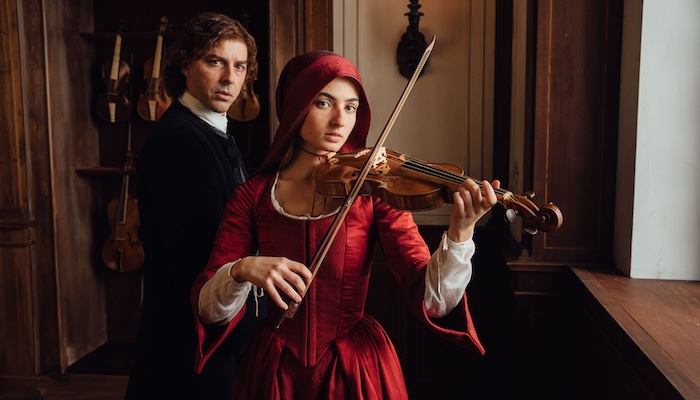
Primavera Review
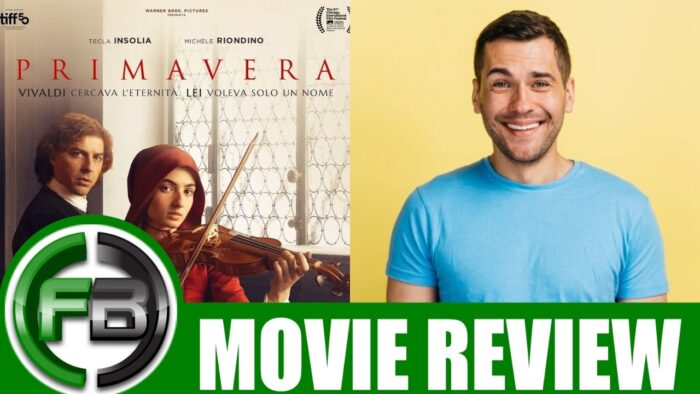
Primavera (2025) Film Review from the 50th Annual Toronto International Film Festival, a movie directed by Damiano Michieletto, written by Tiziano Scarpa, Ludovica Rampoldi, and Damiano Michieletto, and starring Tecla Insolia, Michele Riondino, Andrea Pennacchi, Fabrizia Sacchi, Valentina Bellè, Stefano Accorsi, and Hildegard De Stefano.
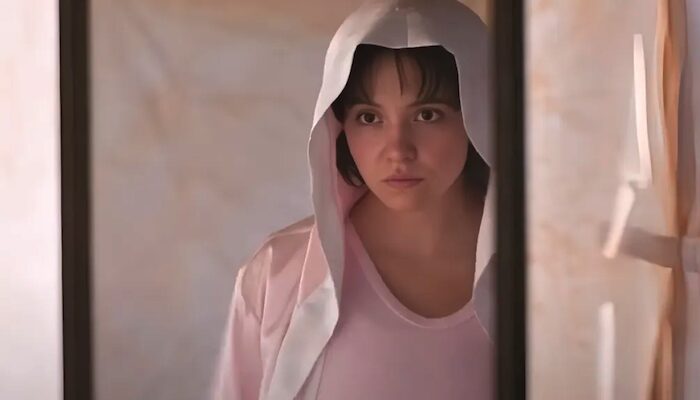
Primavera is a good film about a potential pupil / collaborator and a master artisan, similar to Peter Webber’s Girl with a Pearl Earring, but with more depth on the side of the female protagonist. The motives of the female protagonist in the former film are oblique. In Primavera, orphan Cecilia (Tecla Insolia)’s motives are clear—she wants her birth mother to come for her, and she doesn’t want to be married; she wants to continue playing music. Upon leaving the orphanage, playing music is forbidden. This rule is never explained, but it is one strictly adhered to, so much so that some see it as impending doom, as the protagonists eventually do in a brilliant scene where a boom erupts, frightening, loud, and unexpected, followed by a slow but rapidly increasing series of them, signifying the end of the war, Cecelia’s impending marriage, and the end to her musical career.
Cecelia succumbing to emotion and hugging a woman that has come for her abandoned daughter at the Ospedale della Pietà is a touching moment in Primavera and speaks, without dialogue, of Cecelia’s longing for a mother, family, an accessible past, and a future outside the confines of the orphanage. The woman indulges Cecelia, though Cecelia is too old to be her daughter. A real mother, her daughter restored, authentic affection—that’s all that matters in these precious seconds. The moment Cecelia has been dreaming of for years she eventually watches unfold for someone else. It is one of numerous bittersweet sequences in Primavera. The scene gives insight into Cecelia’s psyche and creates an emotional connection between her and the viewer—Cecelia has never known what most in the audience take for granted every day.
The moment Vivaldi steps into Primavera, there is a shift, with hopeful musicians vying for his attention and notice. Though enthralled by the idea of him, Antonio Vivaldi (Michele Riondino) is not the man built up in the viewer’s mind, the costly man of musical fame. In actuality, he is sickly and weak in body but sound in mind and melodic ability.
Though Primavera is not specifically about musical performances but rather the drama surrounding them, the viewer waits in anticipation for the music of Vivaldi in the film, and when it arrives, they are not disappointed. When finally introduced, the music is sprinkled into the film, not overpowering or distracting from the narrative, as Cecilia and eventual rival Laura (Hildegard De Stefano) will not be distracted from music by nuptials.


The violin duel between Cecilia and Laura is excellent and a lovely display of musical talent being tested and stretched to its outer limits while under the gaze of someone who has transcended those intellectual boundaries. Red-clad dominoes fall during this scene, one by one, until only two remain, years of practice culminating in a singular heartbeat. The result of the duel is impressive and contradictory. Vivaldi picks a violinist that doesn’t seek praise, yet that is exactly what he seeks from his audiences following his performances.
Cecilia and Vivaldi’s growing bond is natural through consistent interactions and has many potential avenues to travel; with the viewer wondering, will it turn this way or that, à la Sofia Coppola‘s Lost in Translation. The two musicians ultimately choose the path that explores each of them as people caught in the entanglement of birth and body.
People habitually say, ad infinitum, how much they love something and that they would do anything to sustain this, that, or the other in their life. Cecilia turns that sentiment into reality in Primavera. When she faces an existential threat, and ‘Plan A’ fails, her hastily cobbled together ‘Plan B’ is audacious, her “hussy” moment, bringing to the forefront of the viewer’s mind Louis Malle’s Pretty Baby, where “gently” replaces the utterance “be gentle.” Cecilia’s sacrifice is her love letter, her lifelong pledge to music, and she gladly pays the toll, knowing that it will close all but a few doors in her life.
Cecilia’s soldier fiancé, played by Stefano Accorsi, is a man used to the battlefield, command, and having his orders obeyed. Most of all, soldier fiancé is used to the respect shown by those under his command. That command structure includes his betrothed, Cecilia, or so he assumes. When he faces betrayal and societal humiliation, the last laugh he delivers is a full unveiling of his true nature but also that of Primavera—the film is not going to go in the direction the viewer suspects. Soldier fiancé’s savagery is completely in line with the character hints given earlier in the film when he returns from war and Cecilia makes a quip (i.e., insubordination), and soldier fiancé admirably suppresses his immediate reaction (remembering that this is no soldier), spurring the rejoinder (a paraphrase), “I will teach you everything you need to know.”
A fellow orphan in Primavera, in one scene a sexual storyteller, in the next, a jailhouse counselor delivering food, generates, at times, a stare that is a twitch or two away from a gloat or a sneer. It floats just below the skin but never surfaces in the film, a masterful demonstration of facial control by the actress. This orphan is no sadist, but she witnesses the very high brought crashing down to her level in the hierarchy of the Ospedale della Pietà. The orphanage is a microcosm of society, with the artists at the top and the non-musical at the bottom. Cecelia’s fellow orphan is a ferrywoman and onlooker to Cecelia’s descent between worlds.
Though close in proximity many times in Primavera, it’s when Cecilia’s musical career has come to a close that Cecilia and Vivaldi undergo the most character development in the film. Cecelia looks for a new life and control over it, and Vivaldi steps out of his safe zone, showing a limited affection for Cecelia and what will become of her, prompting Cecelia to sadly notice, “Now you have found your courage?” When face-to-face with soldier fiancé during a brief segment of tension following a career triumph, Vivaldi doesn’t spoil the moment with a punch, his potential courage faltering as career aspirations take flight, leaving personal growth behind.
Rating: 9/10
Leave your thoughts on this Primavera review and the film below in the comments section. Readers seeking to support this type of content can visit our Patreon Page and become one of FilmBook’s patrons.
Readers seeking more Toronto International Film Festival news can visit our Toronto International Film Festival Page, our Film Festival Page, and our Film Festival Facebook Page.
Readers seeking more film reviews can visit our Movie Review Page, our Movie Review Twitter Page, and our Movie Review Facebook Page.
Want up-to-the-minute notifications? FilmBook staff members publish articles by Email, Mobile App, Google News, Feedly, Twitter, Facebook, Instagram, Tumblr, Pinterest, Reddit, Telegram, Mastodon, Flipboard, Bluesky, and Threads.
Related Articles