


Table of Contents
“You Don’t Know the Rules?”
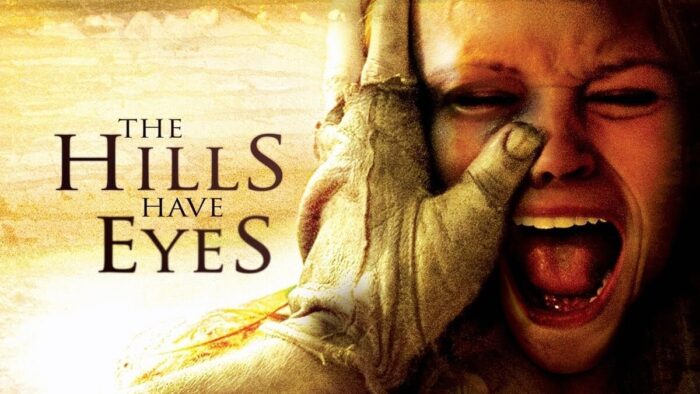
By the time I shuffled into the movie theater in 2006 to watch The Hills Have Eyes, the cat was out of the bag. Remakes were in. Studios realized they could pump these films out for cheap and turn around a sizeable profit. What I’m not sure they realized was that they would be introducing an entirely new generation of horror fans to the films of the past. The remakes served as a horror textbook, a map that allowed me to go back into the film catalogue and view the original source material. Similar to the way that Randy from Scream taught us youngsters about the rules on how to survive a horror film.
I’m not sure what movie ticket I purchased to see The Hills Have Eyes, but it was not the film that I would see that day. In 2006 I was still too young (and young-looking) to be able to pull off that R-rated ticket purchase. Luckily, it was also the heyday for children’s films when Pixar and DreamWorks Animation produced a new blockbuster seemingly every month so I’m assuming it was one of those. What I do remember about that screening was the unbridled terror that shocked my body like a bucket of ice water. A visceral reaction to the carnage that unfolded in the sun-drenched desert of New Mexico, and I could not look away.
This will be the best film discussed (not my favorite) in this highly subjective editorial series. One in which an all-American family must fight for their lives against a group of mutated desert dwellers. One in which The Hills Have Eyes.
The Birth of a Legend
Before he passed the final house on the left, before those hills could blink, even before a dream demon haunted Springwood, and long before a Ghostface killer stalked Sydney Prescott, Wes Craven was a college professor. But as time passed, his passion for film grew like an insatiable hunger. After a short stint as an adult film director, Craven broke onto the scene in 1972 with The Last House on the Left. A gritty reimagining of Ingmar Bergman’s The Virgin Spring, The Last House on the Left emerged as a nasty grindhouse classic. The kind of film a doting father would point to in the Sunday paper and exclaim, “How could anybody watch this crap?”


It shocked audiences and found a home in the blossoming world of midnight movies. But it would be his next film that bought his one-way ticket to Hollywood. With a shoestring budget, a small cast (including Dee Wallace), and a dynamite script, Craven made The Hills Have Eyes in 1977. Produced for several hundred thousand dollars, the movie would earn $25 million at the box office, and the rest is history.
Rest in peace, king.
New Blood

As it happens, it was Craven’s idea to remake his 1977 film. After witnessing the success of The Texas Chainsaw Massacre and Amityville Horror remakes, he decided it was time to play the role of Dr. Frankenstein and bring one of his films back to life. During this time, Craven came across a new filmmaker. Alexandre Aja, a young French filmmaker who stunned audiences worldwide with his 2004 breakthrough hit, High Tension. It follows a young woman on the path of a serial killer who brutally murdered her best friend and her family. High Tension is credited as being a first in the ‘New French Extremity’ movement, which makes the American horror films of the 2000s look like Finding Nemo.
After some classic Hollywood back-and-forth, The Hills Have Eyes set out for the Moroccan desert to shoot the picture. This was a stroke of brilliance. The way Aja photographs the desert in this film gives it an otherworldly quality. It’s jagged and unforgiving. Even more rugged than the California desert that Craven used in the original film. It’s cliché to claim that setting is a character in a movie, but the desert isn’t just important to The Hills Have Eyes; it’s integral.
Aja’s cast is an excellent blend of veteran talent like Ted Levine, Kathleen Quinlan, and Tom Bower and fresh stars including Dan Byrd, Emilie de Ravin, and Vinessa Shaw (who’s a blend of both). They are your typical American family (except Tom Bower) driving across the New Mexico desert enroute to San Diego when they encounter a tire blowout, and all hell ensues. One by one the family is picked off by deformed and deranged desert people living amongst the cacti and tarantulas. Their family unit is the glue that solidifies the movie. Equal parts infighting and empathy, it makes their ultimate demise as easy to swallow as a razor blade.
It’s evident that The Texas Chain Saw Massacre (1974) served as enormous inspiration to Craven’s 1977 film, and Aja stays exceptionally close to the original source material in his remake. But he brings plenty to the project, including smart, dynamic directing and an unflinching world of violence constructed by legendary KNB EFX Group. The camera never looks away. We are subjected to the same terror that the family is. Even watching the film today, I am struck by how powerful the violence is, but also how damn good the picture looks.
Everything You Ever Wanted to Know About Violence

It was Alan Moore who wrote in his groundbreaking graphic novel, From Hell, “One day men will look back and say I gave birth to the 20th century.” Words spoken by Jack the Ripper. I think that the same will be said for the events on September 11th, 2001, and the 21st century. You might balk at the connection between nihilistic film violence and September 11th, but that was an event that affected every aspect of not only our lives but our culture.
A shockwave rippled through the film industry that changed the trajectory of dozens, if not hundreds, of films. While patriotism thrived and our country rallied, horror films festered like an open wound. Xenophobia took hold. The active demonizing of the “other” and the reaction can be seen in our movies. There was no catharsis to the violence. No understanding or happy endings. Just like the newscasts filming the planes flying into the towers or the images of torture from our war in Iraq. What was the point of it all?
The Hills Have Eyes was not untouched by this and the film explores interesting ideas by creating a backstory for its brutal antagonists. Abandoned and forgotten, they suffered grotesque deformities in the wake of the nuclear bomb tests of the 1940s. Now they hunt, capture, and kill the unlucky souls who cross their path, doing God knows what with their bodies. The rotten core of America’s past coming back to light.
Even when you think there is a point to the film and some characters manage to escape the grip of the desert, it zooms out to show us that there are more creatures tucked into the hills. There is no escape. Nowadays a horror film has to have pathos, a meaning that we can take home with us to ponder over (looking at you, A24). The Hills Have Eyes just wants to show you the worst possible scenario and lets you stew in it. It’s not death by a thousand cuts. It’s total annihilation in the grandest sense possible.
The Rare Remake That Outdoes the Original
Leaving the theater in 2006, it felt like my soul had been hit by a freight train sent to hell. Sounds and screams were echoing in my head, and that creepy 50s tune from the opening credits was running through my mind. Its power lies in its extremity. Violence is the point and terror waits for all of us at the other end of the equals sign. This is the only remake to surpass the original, but that’s not to say Wes Craven’s original film isn’t worth your time. It is a marvel of indie filmmaking. I just want to give credit to Aja, who updated it perfectly for little sickos like me.
The next time you’re driving through an empty stretch of desert, do yourself a favor and ignore the unmarked dirt road on your left.
Readers seeking more editorials can visit our Editorials Page.
Readers seeking more movie trailers can visit our Movie Trailer Page, our Movie Trailer Twitter Page, our Movie Trailer Reddit Page, and our Movie Trailer Facebook Page.
FilmBook staff members publish articles by Email, Mobile App, Google News, Apple News, Feedly, Twitter, Facebook, Instagram, Tumblr, Pinterest, Reddit, Telegram, Mastodon, Flipboard, Bluesky, and Threads.
Related Articles


![PRIMETIME (2026): A Film That Shows the Media at Its Darkest and Most Frightening [Critic's Notebook Series]](https://film-book.com/wp-content/uploads/2026/10/Robert-Pattinson-Primetime-01-1200x675-1-700x394.png)