



TRAIN DREAMS Finds Stillness, Strength, and Meaning in the Margins [TIFF 2025]

Train Dreams Editorial from TIFF 2025
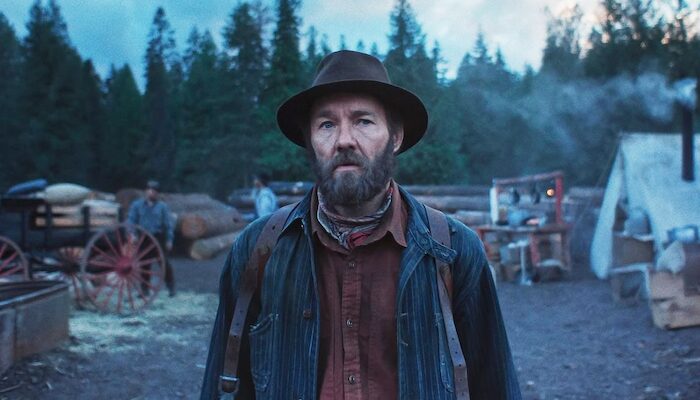
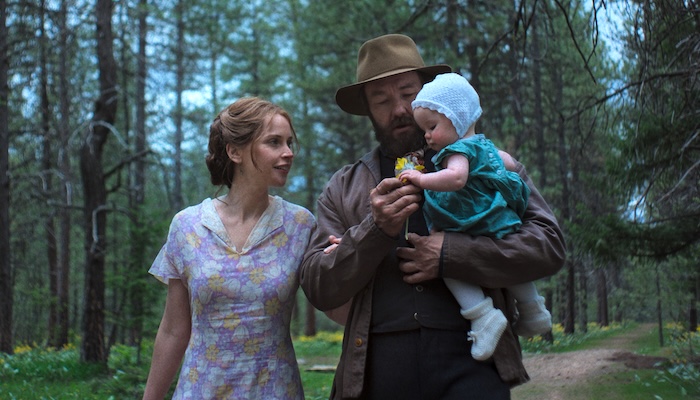
Train Dreams (2025) could almost be described as a biopic of its main character, Robert Grainier (Joel Edgerton), and the resultant film, a study on him from a third-person omniscient perspective, had Robert Grainier ever existed.
Like the main character in The Good Shepherd and, to a very small extent, Valhalla Rising, Robert Grainier is a man of few words. More people speak around him and to him than he is the instigator of those interactions, e.g., his future wife introduces herself to Robert, not vice versa.
The ax chops, slices, and nicks visited upon the forests in Train Dreams mimic the emotional traumas Robert eventually contends with as the narrative plays out. Though he questions, objects, and tries to intervene when some of these incidents happen, he bears most of it in dispassionate, yet observant, silence.
One of those things observed, but not directly commented on, in Train Dreams is racism. The racism in Train Dreams is extraordinary—railroad companies use Chinese people to build the railroads and communities in early 20th-century America, then non-Chinese come and kick the Chinese out of those communities or kill them. The attackers don’t explain anything. They just do it, in the open, with no apparent consequences. The murder of Chinese logger Fu Sheng (Alfred Hsing), which Robert doesn’t intervene in—Robert doesn’t know what is going on or that Sheng is about to die. The incident eventually haunts Robert, a great analogy of how America’s past haunts the United States to this day. This is executed quite effectively in the film through memory flashes for Robert, vision blinks of regret, or of innocence lost.
It’s a cross section of a period of American history in a few tragic scenes, but it also offers insightful glimpses into Robert and his world. Robert feels sympathy, has a sense of justice (hence him asking what Sheng had done), and feels regret. Robert is human, confronted at times by monsters that justify terrible actions as protecting ‘their’ own and ‘their’ way of life from foreigners and foreign influences.


Train Dreams‘ scope is able to narrow when dealing with matters of the heart. The buck’s death acts as a release valve for Robert and the emotions that have been bottled following his wife and daughter’s deaths. Robert either feels comfortable enough around Ignatius Jack (Nathaniel Arcand) to cry in front of him, or the emotions are so great, Robert has no control over their eruption. In either case, the acting is superb in a critical moment for the character and his emotional arc in the film.
William H. Macy’s Arn Peeples is a loveable character and brings humor into Train Dreams. His stories are endearing, and Arn seems able to make a friend out of just about anyone. He doesn’t work much though, as director Clint Bentley’s camera concentrates and pulls back on him talking as the logging camp is bustling all around him.
When Robert and Billy (John Diehl) meet later in life and Billy has completely forgotten that Arn died years ago, it’s a sad moment in the film. Though the culprit is probably a failing memory, it accentuates that people come in and out of each other’s lives in Train Dreams, and some are barely remembered.
From the outset of the film, Will Patton’s narration carries the film, helps it, and guides it, annotating the present while giving light backstory where appropriate to set the mood of the tale. It’s unobtrusive, almost as if the narrator is taking in the story alongside the viewer.
The environment is a character in Train Dreams, not to the extent in a Terrence Mallick film, but it is there, working in scenes, sometimes the centerpiece in a shot, other times a background element in a sequence. Arn and the narrator help Robert and the viewer focus on the beauty of these surroundings. In one moment, the narrator talks, and terrain sails by as loggers lounge in boxcars. In other moments, it’s subliminal. Robert’s wife and his daughters’ bodies are never found. Perhaps they were burned up completely, cremated in the intense heat of the forest fire, becoming part of the very environment that consumed them. When Robert dies, the forest reaches onto his deathbed, becoming one with his corpse, feeding on it, a meddling of his body and the forest’s continuous vitality.
Robert Grainier is finally connected to the world and nature in a biplane at the end of the film, flying above it, seeing its full extent from a bird’s-eye view. It’s ironic; he had to leave the surface of the verdant world to feel it. When he was amongst it, his connection to it was tenuous, if there at all. In the plane, nature’s immensity and its complexity grab him. He sees and feels what Arn did when Arn looked at the forest and nature, and maybe, so does the viewer.
Leave your thoughts on this Train Dreams editorial below in the comments section. Readers seeking to support this type of content can visit our Patreon Page and become one of FilmBook’s patrons.
Readers seeking more editorials can visit our Editorials Page.
Readers seeking more Toronto International Film Festival news can visit our Toronto International Film Festival Page, our Film Festival Page, and our Film Festival Facebook Page.
FilmBook staff members publish articles by Email, Mobile App, Google News, Apple News, Feedly, Twitter, Facebook, Instagram, Tumblr, Pinterest, Reddit, Telegram, Mastodon, Flipboard, Bluesky, and Threads.
Related Articles



![Film Review: 14TH: Ava DuVernay's Bold Film is an Incredible Accomplishment [NYFF 2026]](https://film-book.com/wp-content/uploads/2026/10/14th-1-1200x675-1-700x394.png)
